SPECIAL WHOLESALE PRICES AVAILABLE - CONTACT US FOR BULK ORDERS
What Makes a Cotton Mulmul Saree Truly “Handcrafted” in India?
Cotton mulmul sarees are known for their softness, lightness, and unmatched comfort. But the truth is—not every cotton mulmul saree is truly handcrafted.
hemant chhipa
1/11/20262 min read
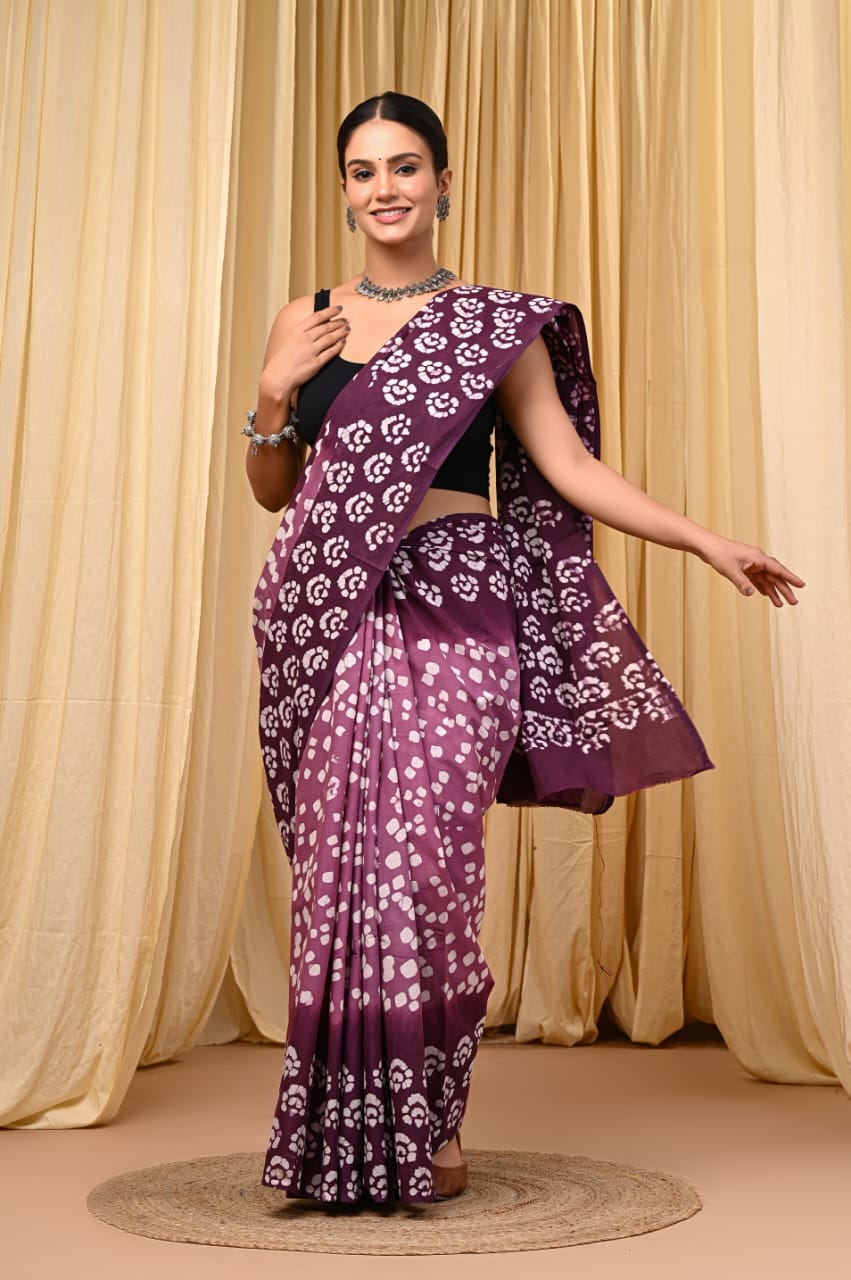
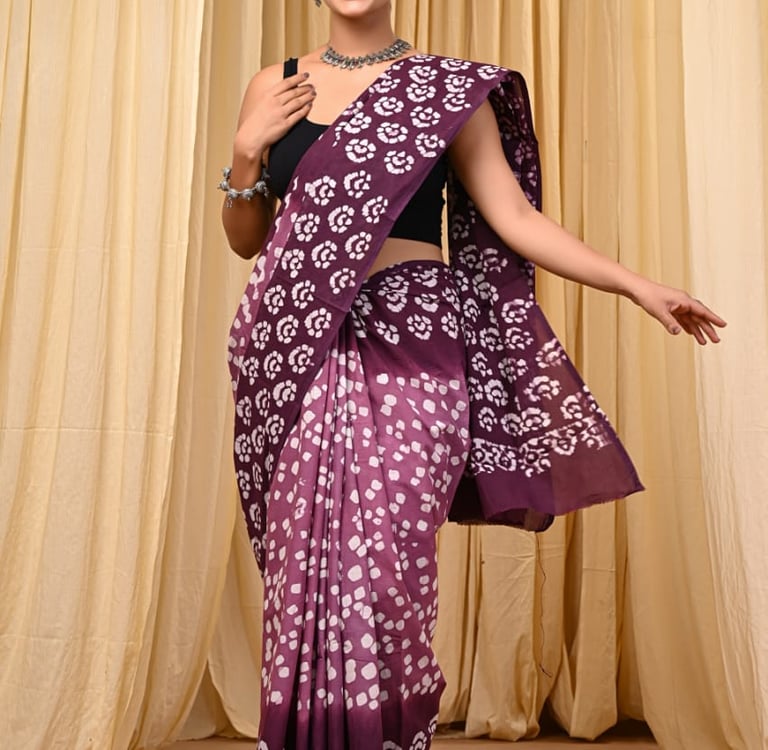
Today, the Indian market offers three types of mulmul sarees:
Fully handcrafted
Semi-handcrafted
Machine-made (often wrongly sold as “handloom” or “handcrafted”)
This guide explains what genuinely makes a cotton mulmul saree handcrafted—not by label, but by process.
1. True Handcrafted Mulmul Begins With Yarn, Not Ready Fabric
A genuinely handcrafted cotton mulmul saree is defined even before weaving starts.
✔ Handcrafted Approach:
Fine cotton yarn (usually 80s–120s count)
Manual yarn winding and preparation
Minimal or no starch to preserve natural softness
Yarn tension adjusted according to the handloom
❌ Machine-Made Approach:
Pre-finished mill fabric
Heavy chemical treatments
Uniform thickness without breathability
In handcrafted mulmul, softness is part of the yarn—not added later.
2. Handloom Weaving Is the Backbone of Handcrafted Mulmul
The most important element of craftsmanship is weaving.
Truly Handcrafted Mulmul:
Woven on traditional handlooms
Shuttle moved manually by the weaver
Warp and weft controlled by human hands
Natural air pockets within the fabric
This results in:
Extremely lightweight fabric
Excellent breathability
Cooling comfort in hot climates
Powerloom or Machine Mulmul:
Faster production, less control
Tighter weave structure
Fabric feels stiff after use
👉 If human hands guide the loom, craftsmanship begins there.
3. Hand Block Printing Gives Mulmul Its Soul
Being cotton mulmul alone is not enough.
The printing process determines whether the saree is truly handcrafted.
Handcrafted Printing Process:
Hand-carved teakwood blocks
Separate blocks for each color
Each block placed and pressed manually
Alignment guided by the artisan’s eye, not machines
This means:
Slight irregularities in prints
Living, expressive patterns
No two sarees are exactly identical
Machine or Digital Printing:
Perfect repetition
Flat, mechanical appearance
No artisan involvement
Handcrafted textiles value character over perfection.
4. Natural and Low-Impact Dyeing Matters
Authentic handcrafted cotton mulmul sarees use natural or low-impact dyes.
Handcrafted Dyeing:
Indigo, madder, iron-based, and herbal dyes
Low-temperature dyeing methods
Slow, even color absorption
Results include:
Soft, soothing color tones
Reduced risk of skin irritation
Improved softness after every wash
Chemical Dyeing:
Artificial brightness
Higher chances of color bleeding
Fabric can become harsh over time
True handcrafted mulmul improves with age—it does not degrade.
5. Manual Washing, Drying, and Finishing
Machine-made mulmul relies on chemical softeners.
Handcrafted mulmul relies on time and care.
Handcrafted Finishing:
Gentle hand washing
Sun-drying in open air
Natural airflow
No artificial polish or coating
This is why:
The saree feels soft from the first wear
Becomes even softer after multiple washes
Remains breathable even after years of use
Machine-made mulmul feels soft initially—but loses life quickly.
6. Human Time Is the Real Value of Handcraft
A truly handcrafted cotton mulmul saree involves:
The weaver’s skill
The printer’s precision
The dyer’s experience
The finisher’s patience
At every stage, human judgment matters more than machine speed.
This is why:
Production is slow
Quantities are limited
Each piece feels honest and alive
7. How Buyers Can Identify a Truly Handcrafted Mulmul Saree
Simple signs buyers should look for:
✔ Fabric feels feather-light
✔ Prints show slight natural variation
✔ Colors are soft, not glossy
✔ Fabric feels breathable, not synthetic
✔ Seller can explain the production process clearly
If a seller only says “best quality” but cannot explain the process—it is not truly handcrafted.
8. Why Handcrafted Cotton Mulmul Matters Today
In an age of fast fashion:
Handcrafted mulmul supports sustainability
Protects artisan livelihoods
Offers skin-friendly comfort
Represents long-term value, not short-term trends
It is not just a saree—it is a living tradition of Indian textiles.
Final Thought
A cotton mulmul saree is truly handcrafted not because of a tag, but because human hands shape it at every stage—from yarn to final drape.
Morviya Textile is a trusted cotton mulmul saree wholesaler and manufacturer, specializing in authentic hand block printed sarees crafted by skilled artisans.
We supply premium quality sarees to wholesalers, retailers, boutique owners, and online resellers across India with a strong focus on consistency, fabric purity, and timeless designs.